
A peptide is a specific molecule
Peptides are chains of amino acids. Testing starts by asking whether the main material looks chemically consistent with the named sequence.
This guide is for people who are new to peptides, new to COAs, or trying to understand why one test result cannot answer every quality question. It starts with the familiar report rows, then shows where stronger modern methods add better evidence.
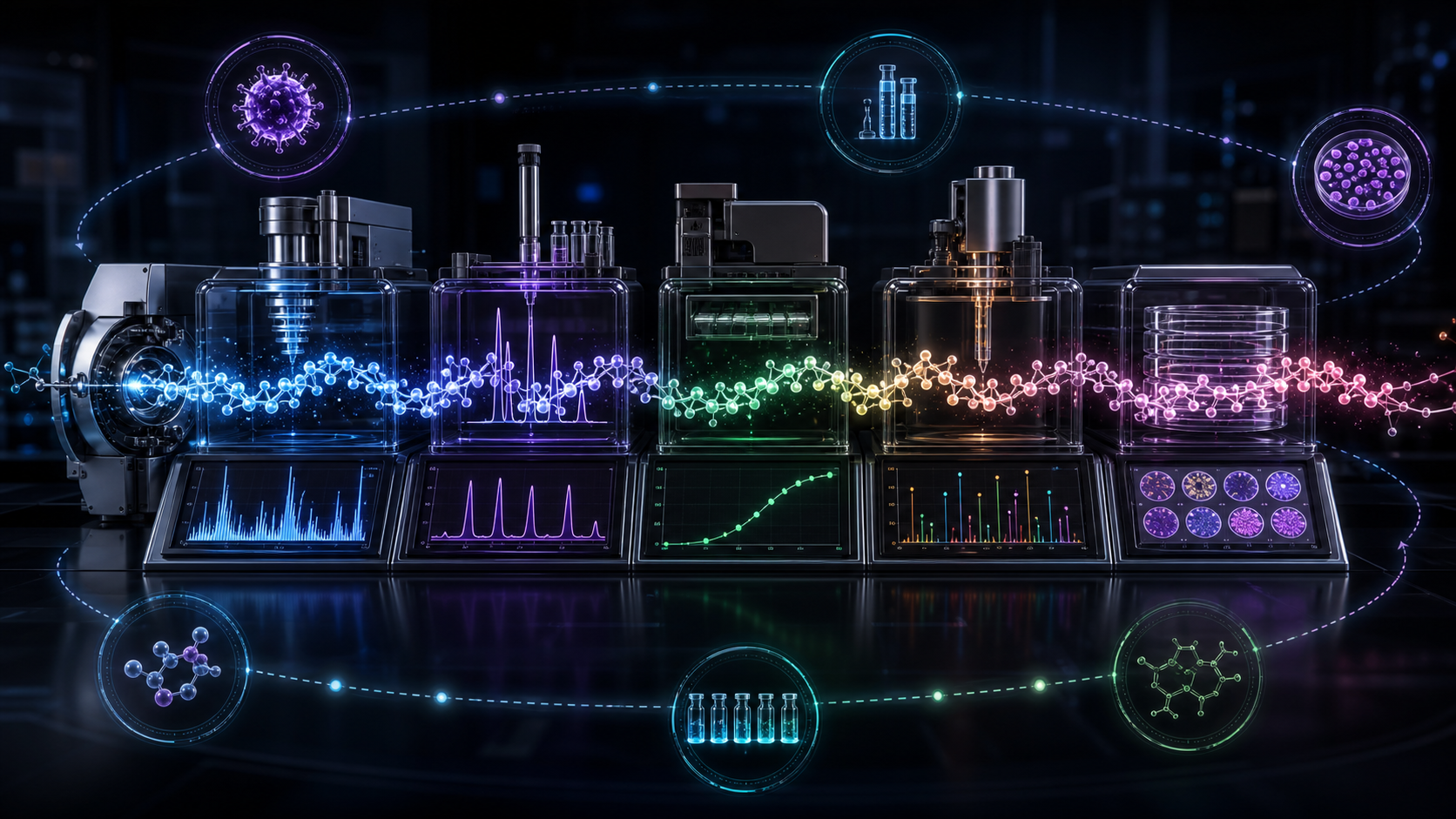
Peptides are chains of amino acids. Testing starts by asking whether the main material looks chemically consistent with the named sequence.
A Certificate of Analysis reports what specific tests found. It is not a general safety certificate, clinical claim, or approval document.
Identity, purity, amount, contaminants, microbiology, and stability are separate questions. A good COA keeps those answers separate.
The goal is not to make the current rows sound wrong. The goal is to make the evidence more specific. A stronger report shows the method, the signal, the controls, and the boundary of the result.
LC-MS identity confirmation with mass-confirmation evidence.
Look for the expected and observed mass, tolerance, chromatographic context, and the exact component to which the identity decision applies.
HPLC-UV chromatographic purity and a reported percentage when that panel was performed.
Read the percentage with the chromatogram, integration basis, impurity peaks, wavelength, and system-suitability information. Identity-only reports omit this result.
Net peptide content in milligrams when reported, including repeatable component rows for blends.
Confirm the method, label basis, calibration or reference basis, component identity, and whether the report actually includes a numerical amount.
The reviewed recurring reports do not establish an elemental-impurity panel.
Request element-specific testing, commonly ICP-MS or ICP-OES, when the release question requires it; show the target list and sample preparation.
A PCR screen reports whether microbial DNA was detected in the tested sample.
Keep PCR screening separate from viable microbial enumeration, sterility, and endotoxin testing. Each requires its own method and release rule.
Start with the molecule, then the detected impurity profile, then the amount, then contaminants and microbiology. Only after that should anyone talk about claim-specific tests such as sterility, endotoxin, residual solvents, or stability. Those are important, but they are not implied by a basic report row.
These are valuable educational topics, but they are not automatically part of the recurring COA panel. They should be requested and interpreted only in the context of the actual question being asked.
Relevant only when the workflow needs a sterility-test question answered. TAMC and TYMC do not replace it.
Read explainerA separate test for endotoxin activity. It does not prove sterility and does not detect every pyrogen.
Read explainerTargets volatile solvent residues from synthesis, purification, drying, or handling when process knowledge makes them relevant.
Read explainerTurns a one-time COA snapshot into trend evidence only when time points, storage conditions, and methods are controlled.
Read explainerThese pages are research-use-only analytical education. They are not medical, safety, legal, regulatory, quality-system, purchasing, or product-use advice, and they do not state that any material is safe, effective, sterile, injectable, therapeutic, approved, compliant, or fit for human, animal, clinical, therapeutic, diagnostic, drug, dietary, cosmetic, resale, or other regulated use.