Peptide testing, explained from the method up.

Each page teaches what a test measures, how the method works, what a COA result can support, and where the result stops. The emphasis is analytical evidence, not medical or performance claims.

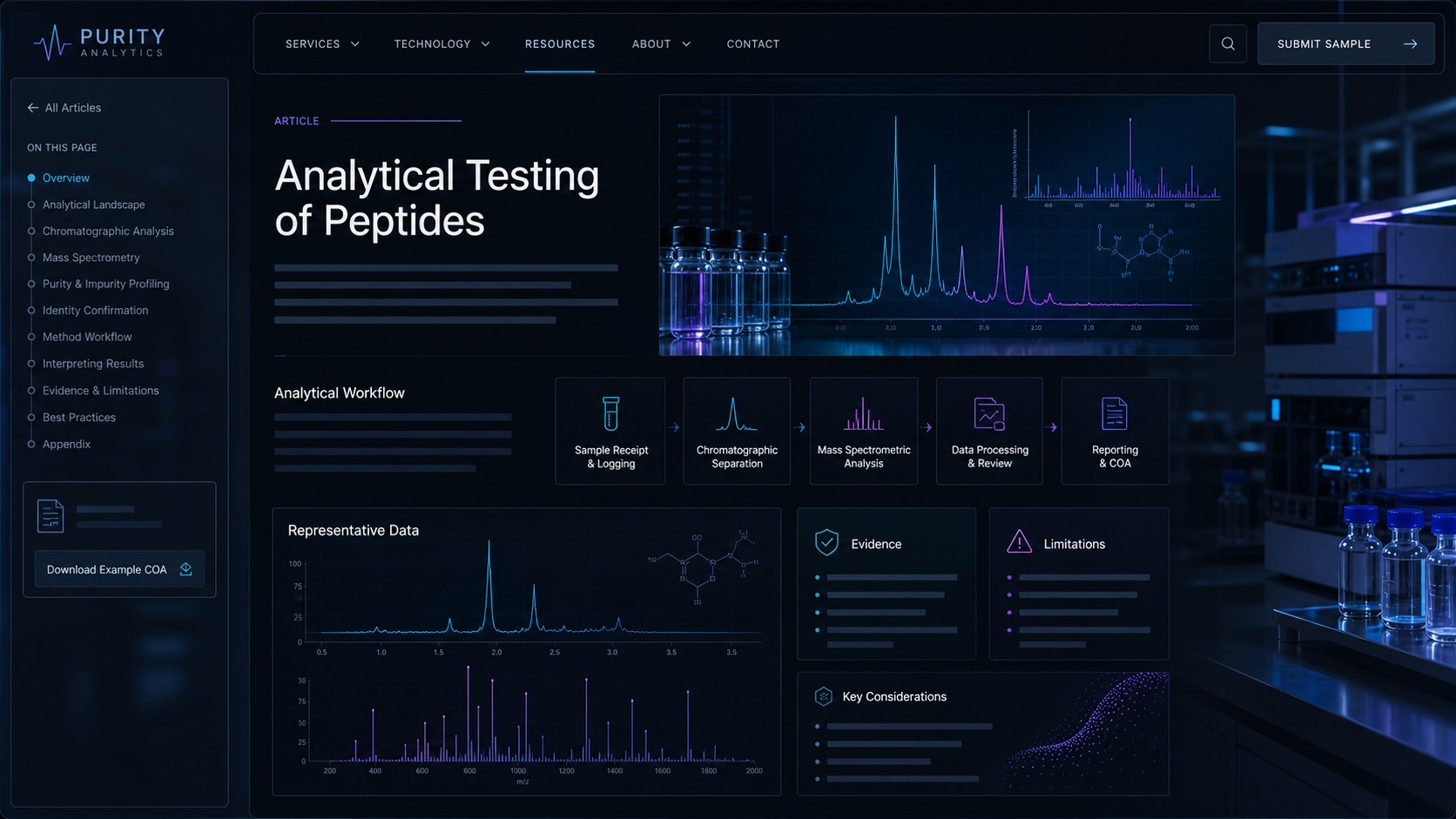
Dark interface concept showing peptide analytical testing article modules and lab instrumentation.
Current COA rows identity, purity, assay, metals, TAMC, TYMC

Follow the beginner path before the deep method articles.

The starting guide explains what a peptide COA is, why identity, purity, amount, contaminants, microbiology, and stability are separate questions, and which stronger modern signals can improve on a familiar report row.

Open beginner path

What the familiar COA rows tell you, and what deeper testing adds.

Reviewed COA examples use UV/Vis language for identity, purity, and quantitative assay, plus heavy-metals, TAMC, and TYMC rows. Those rows can be educationally useful, but modern peptide quality work often needs more specific methods: LC-MS for identity, chromatographic impurity profiling, calibrated assay, element-specific ICP-MS, and microbiology controls matched to the claim being made.

01 Composition

Identity, purity, assay, and degradation profiles describe the peptide signal.

02 Contaminants

Elemental impurities and residual solvents look for process-related residues.

03 Microbiology

TAMC, TYMC, sterility, and endotoxin answer different microbial questions.

Start with the recurring peptide COA sections.

These pages map directly to the COA rows already visible in current COA workflows, then explain the more specific analytical methods that can strengthen the evidence.

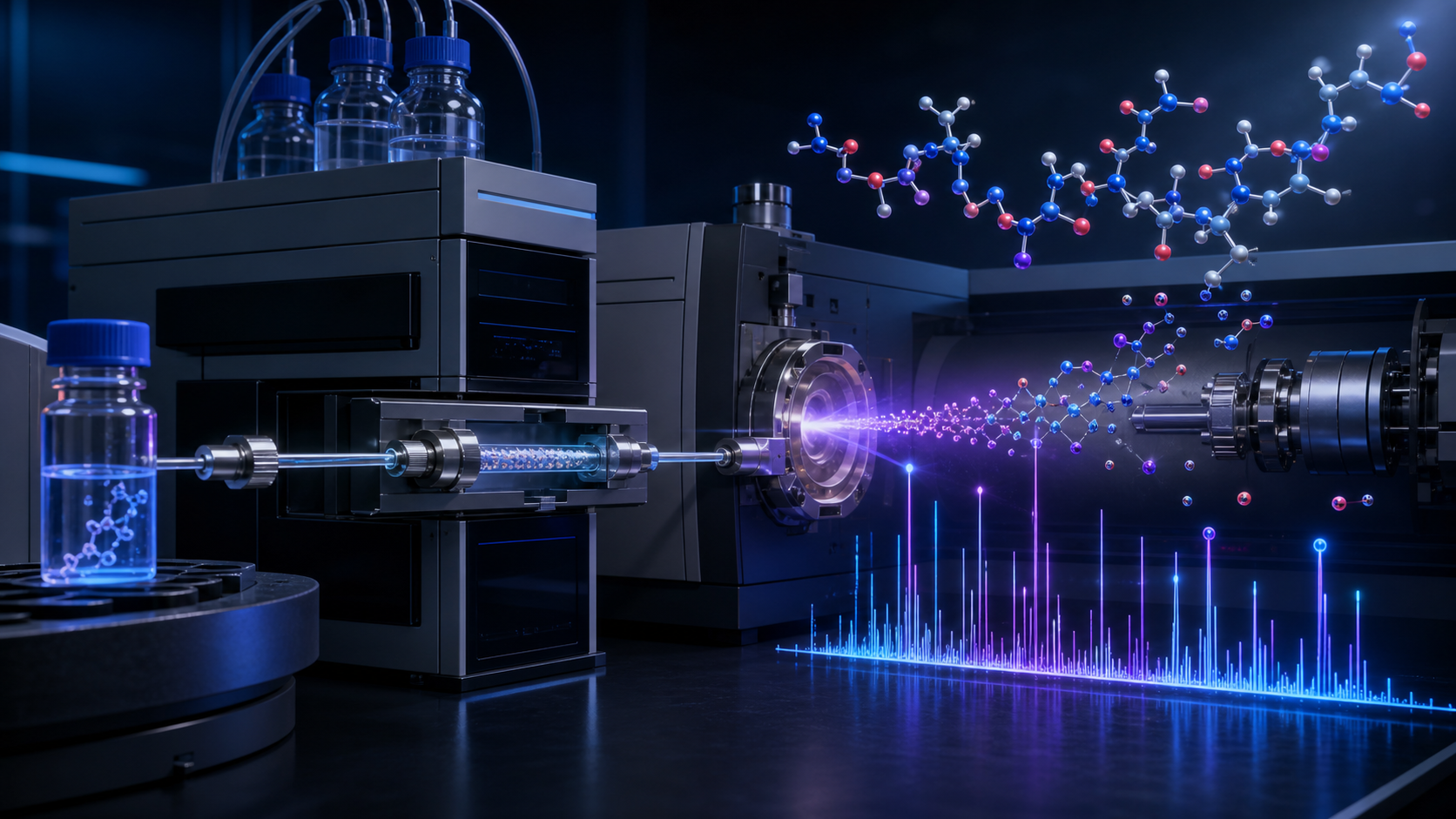
Dark scientific rendering of a peptide sample flowing from liquid chromatography into a mass spectrometer with spectral peaks.
Liquid chromatography-mass spectrometry

Peptide Identity by LC-MS

Identity testing asks whether the material in the vial is the intended peptide. LC-MS adds molecular-mass and fragmentation evidence that a UV/Vis lambda-max row cannot provide by itself.

9 min read
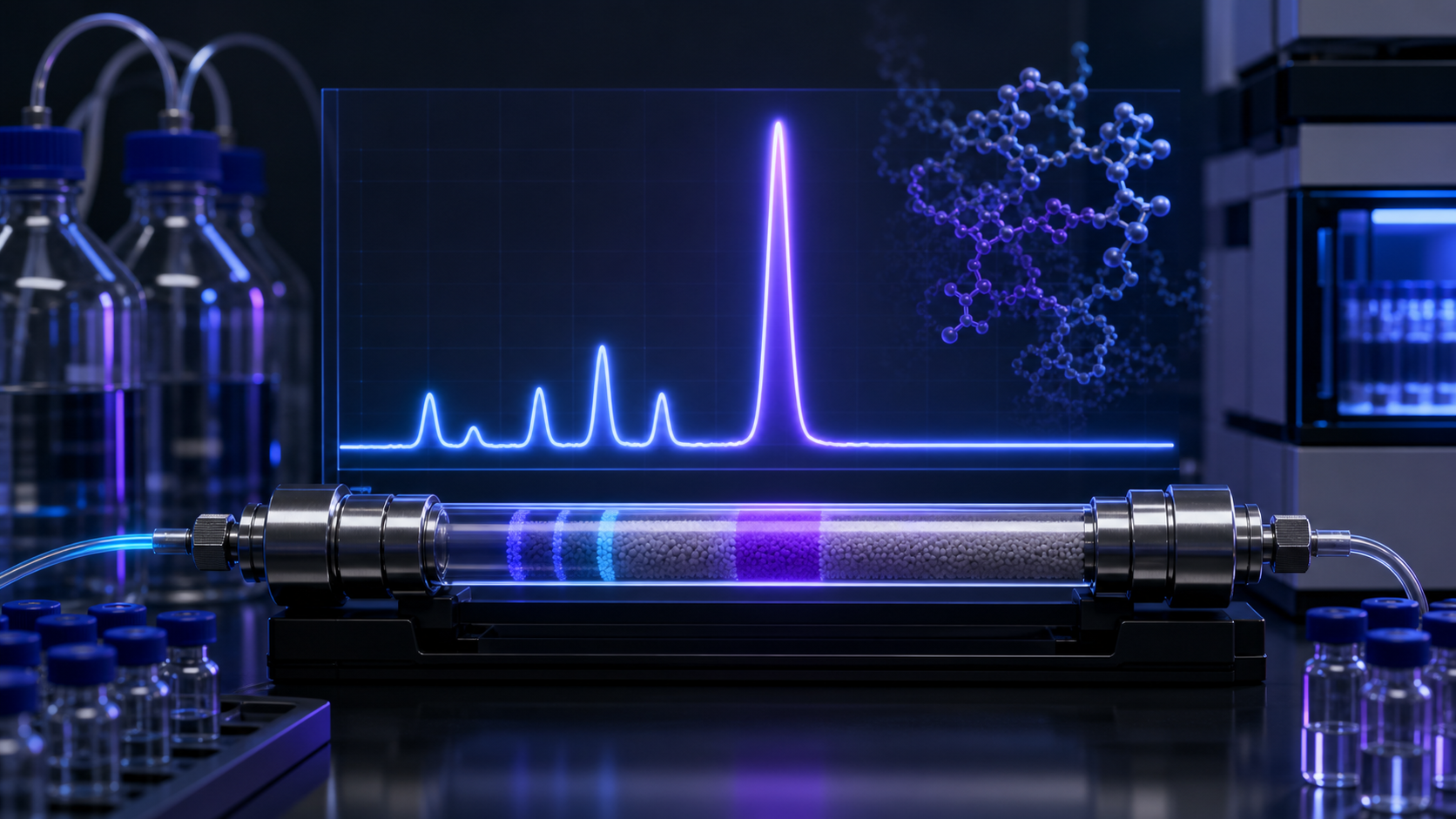
Dark scientific rendering of a chromatography column separating peptide and impurity bands with a glowing chromatogram.
Reversed-phase chromatographic separation

Chromatographic Purity by HPLC or UPLC

Purity is not just a big percentage. It is the fraction of detected signal assigned to the main component under a specific separation, detector, wavelength, and integration method.

10 min read
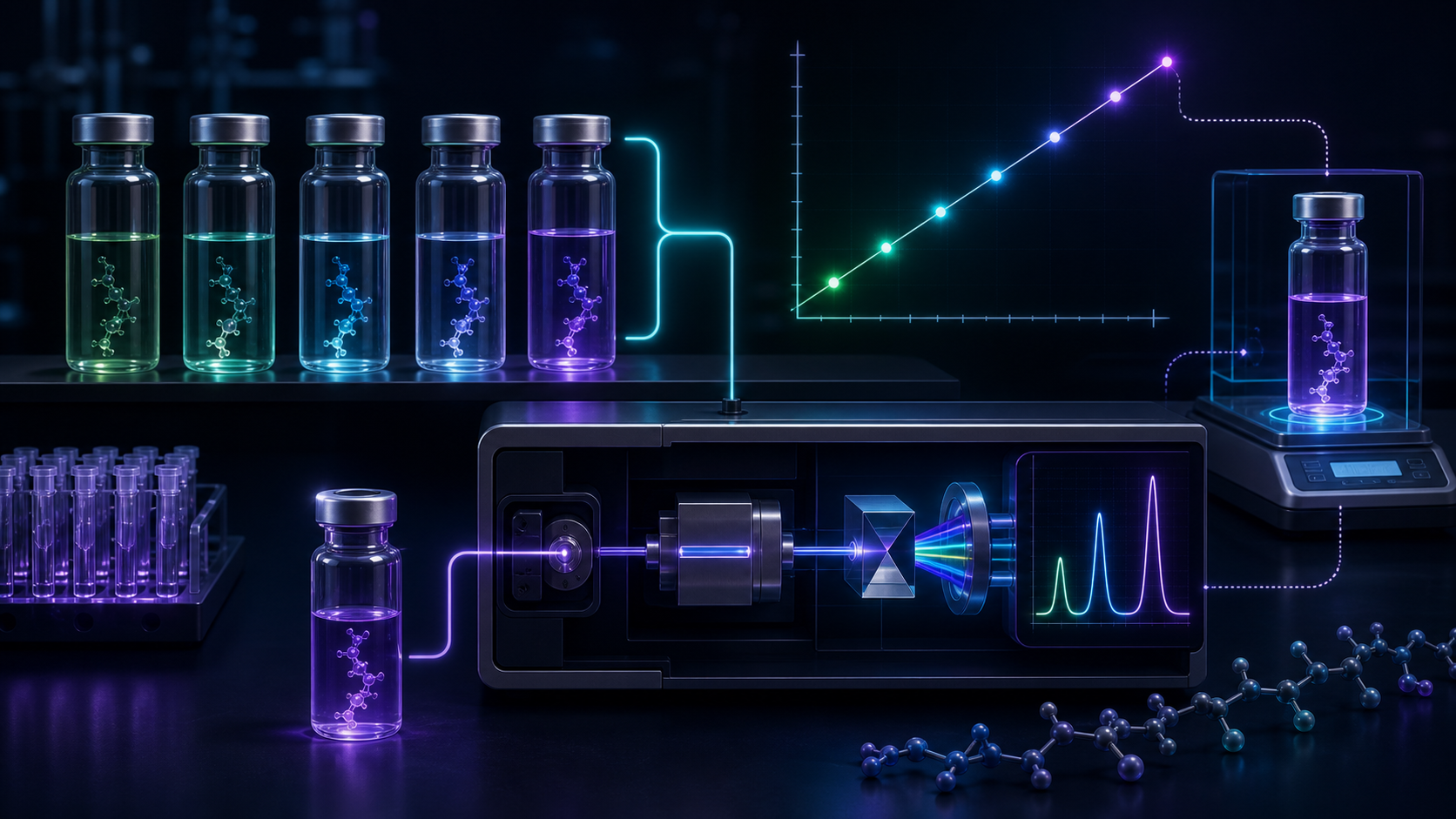
Dark scientific rendering of calibrated peptide reference vials, detector optics, and a calibration curve.
Reference-standard calibration and validated calculation

Quantitative Assay and Peptide Amount

Quantitative assay asks how much peptide is actually present. It is the section that connects a chromatographic or spectroscopic response to an amount per vial.

9 min read
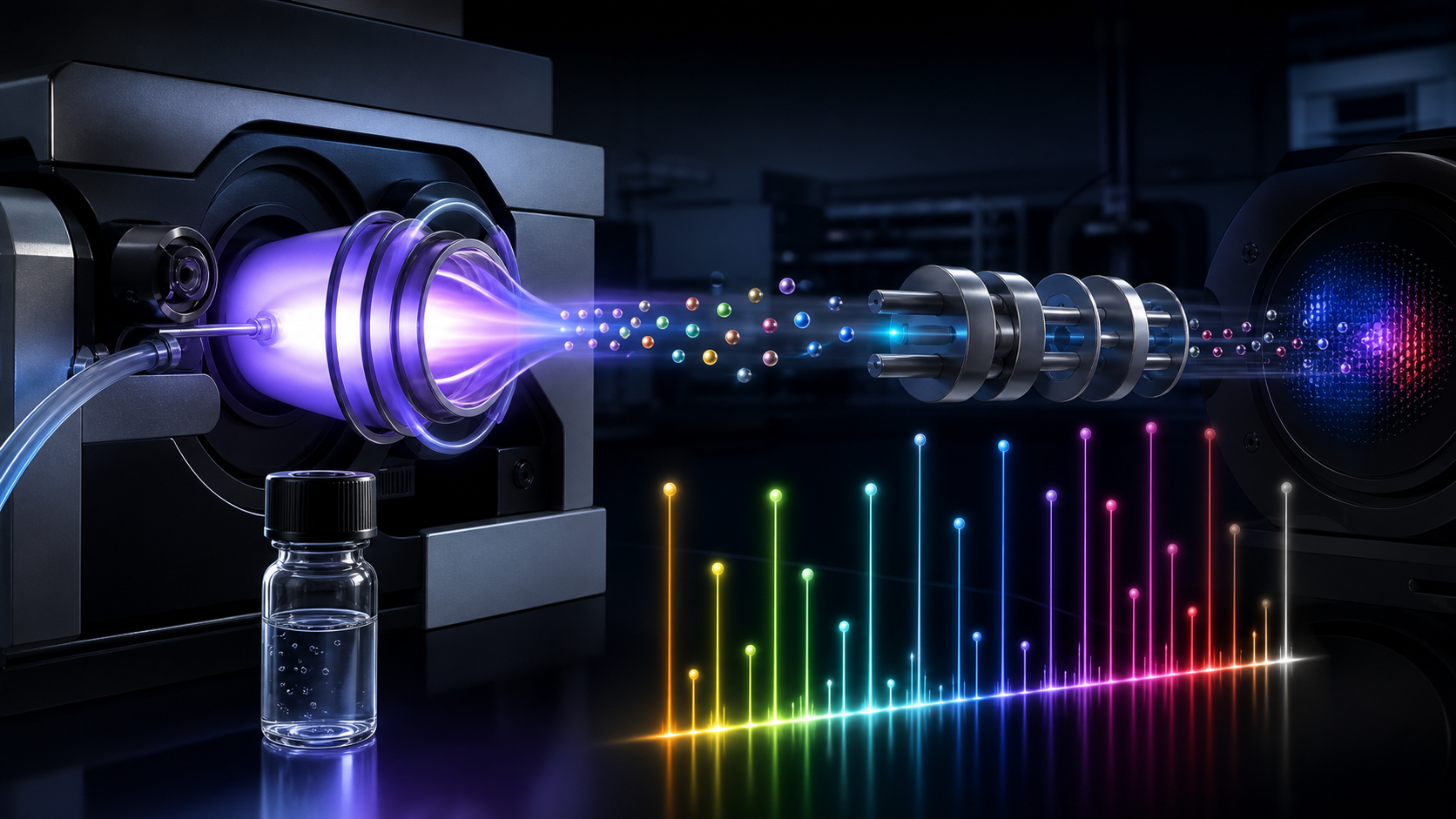
Dark scientific rendering of a plasma torch ionizing trace metal ions for elemental impurity analysis.
ICP-MS or ICP-OES trace-element analysis

Elemental Impurities and Heavy Metals

Heavy metals testing is best treated as elemental impurity risk control: what elements could be present, at what concentration, and under what validated detection method.

8 min read
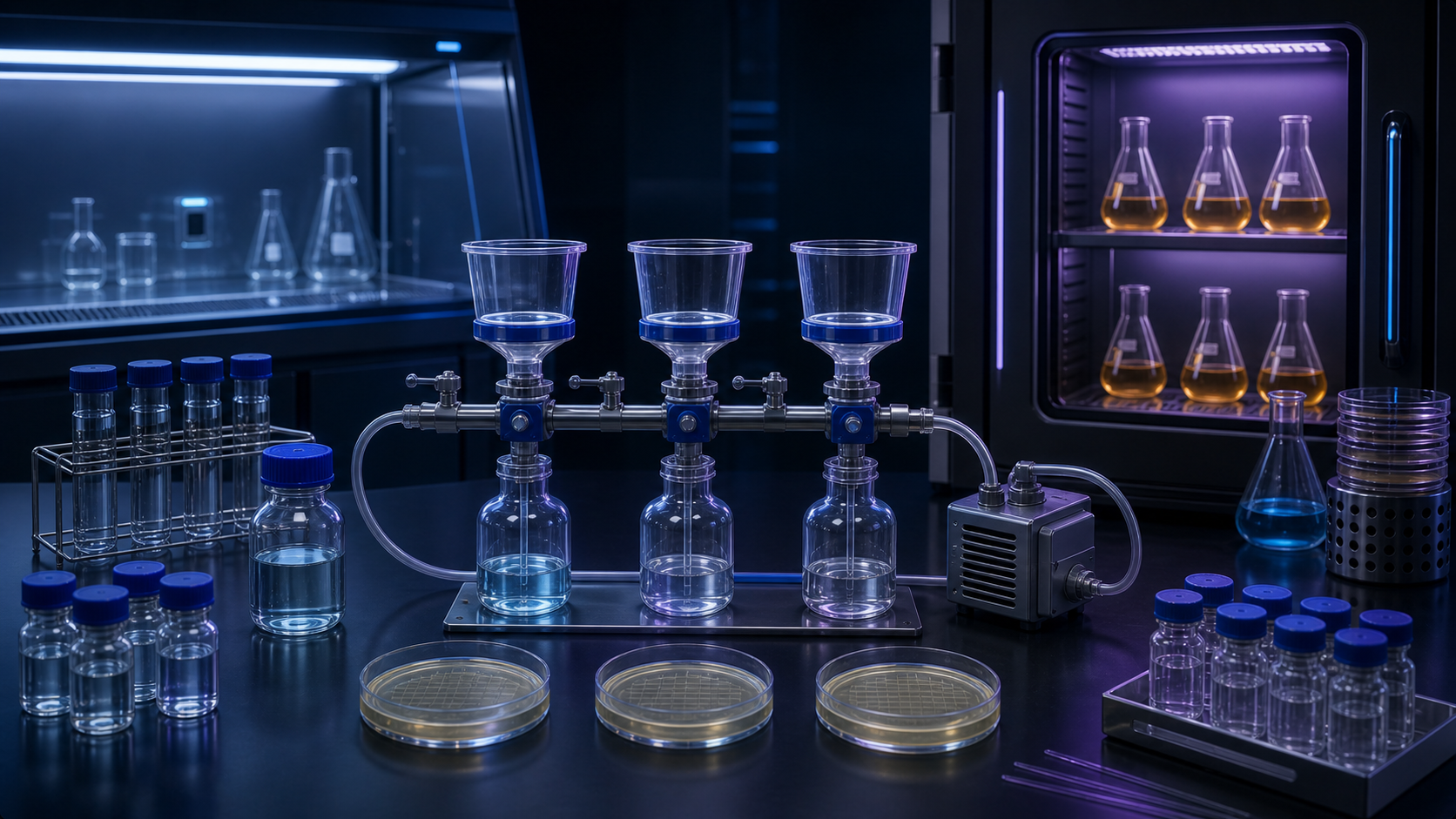
Dark scientific rendering of petri dishes, membrane filtration, and controlled microbial colony enumeration.
Microbial enumeration by growth-based count

TAMC and TYMC Microbial Enumeration

TAMC and TYMC report recoverable microbial growth under defined media and incubation conditions. They are enumeration categories, not sterility tests.

8 min read

Use claim-specific tests when the COA needs more than a standard panel.

These tests should not be casually implied. They become important when the product claim, manufacturing route, sample state, or release question calls for them.

Dark scientific rendering of sterile membrane filtration units, media vessels, and incubator flasks with no visible growth.
Membrane filtration or direct inoculation

Sterility Testing

Sterility testing asks a different question than microbial counts: did viable microorganisms grow from the tested units after incubation under sterility-test conditions?

9 min read
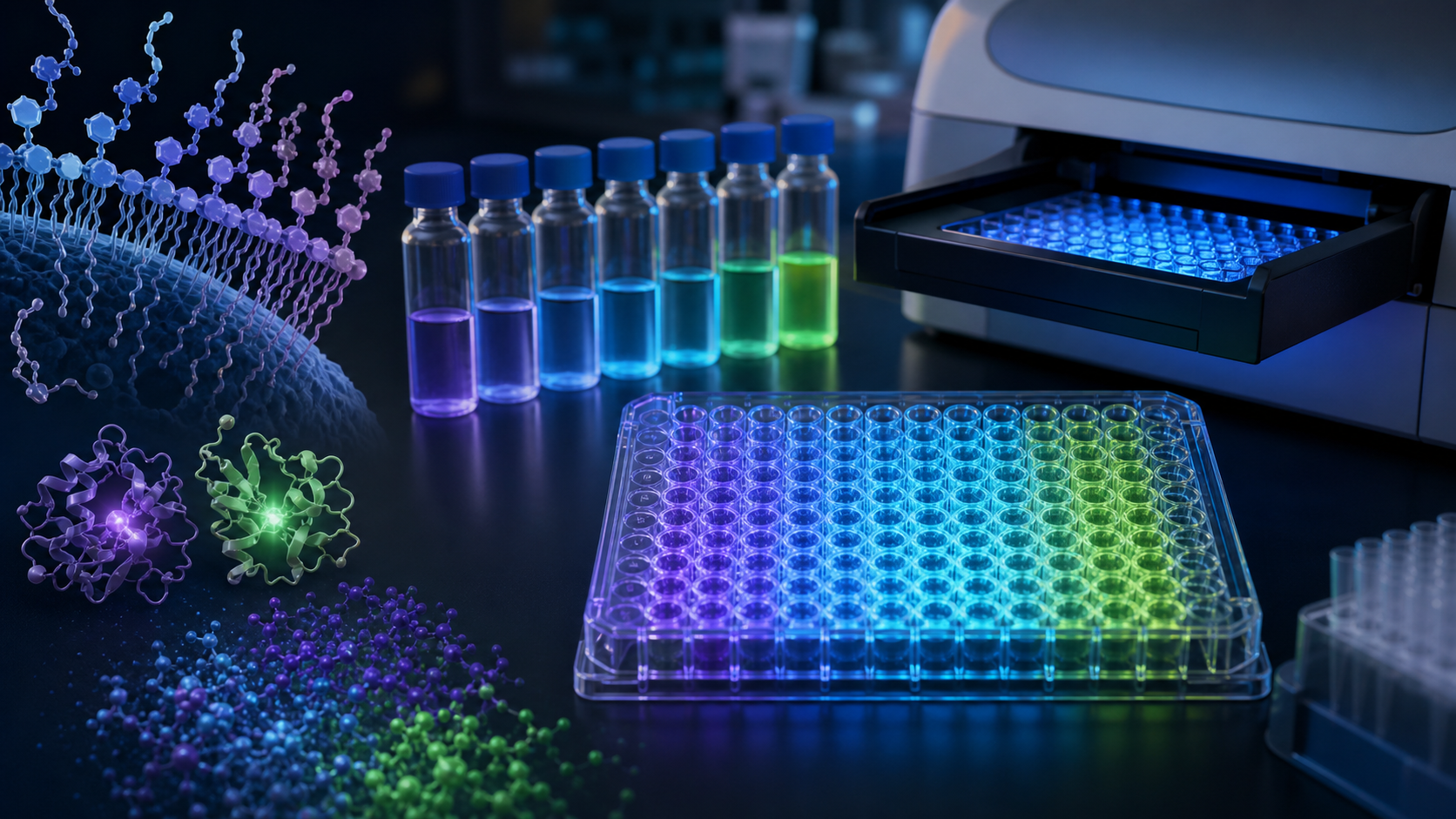
Dark scientific rendering of a fluorescence plate reader and microplate endotoxin assay with glowing wells.
LAL or recombinant-reagent endotoxin assay

Bacterial Endotoxin Testing

Endotoxin testing detects lipopolysaccharide activity from gram-negative bacterial material. It is a different risk signal than sterility or microbial count.

8 min read
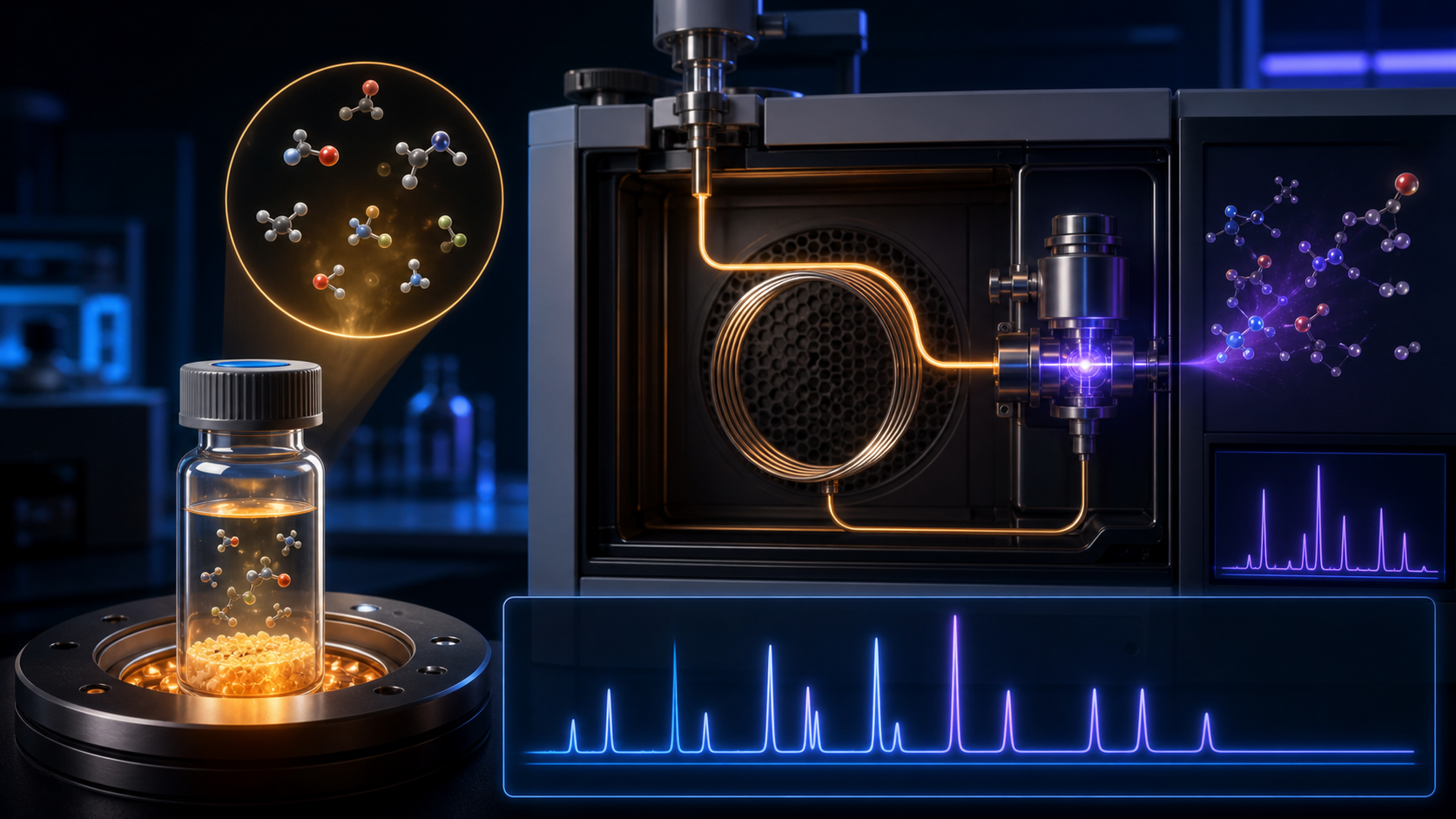
Dark scientific rendering of heated headspace vials, a gas chromatograph oven, and a chromatogram trace.
Headspace gas chromatography or GC-MS

Residual Solvents by Headspace GC

Residual solvent testing asks whether volatile process solvents remain in the material after synthesis, purification, drying, or formulation.

8 min read
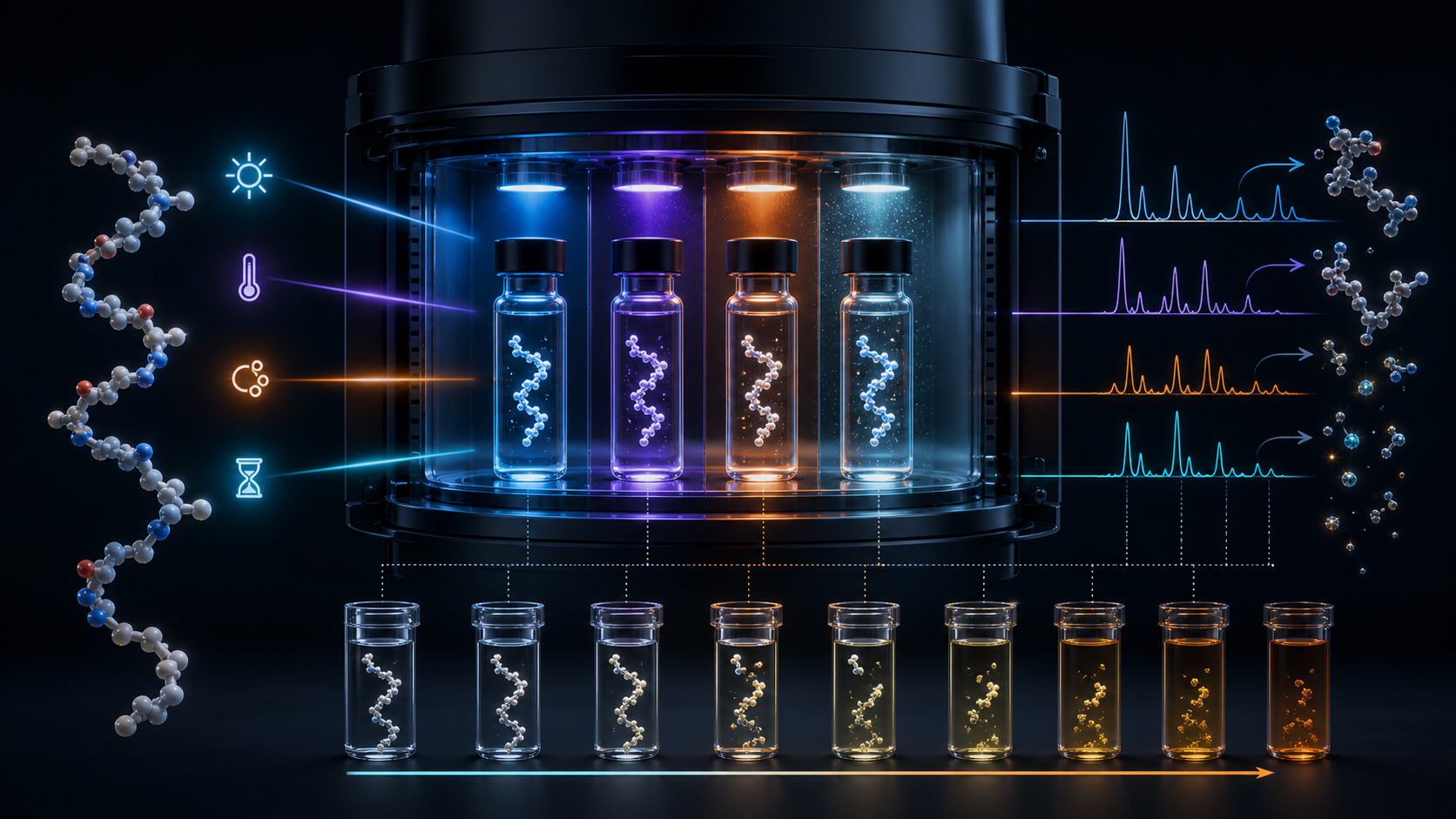
Dark scientific rendering of peptide vials in controlled light, heat, oxidation, and time conditions with chromatographic traces.
Time-course, stress, and degradation-indicating analysis

Stability and Degradation Profiling

Stability testing asks how the peptide changes with time, temperature, light, oxidation, humidity, or solution state. It is the bridge between a single COA snapshot and a shelf-life claim.

9 min read

Analytical evidence is not a clinical claim.

These articles explain test methods and COA interpretation. They do not state that any peptide is safe, effective, sterile, injectable, therapeutic, approved, compliant, or fit for human or animal use. Method pages should be read as analytical education only.