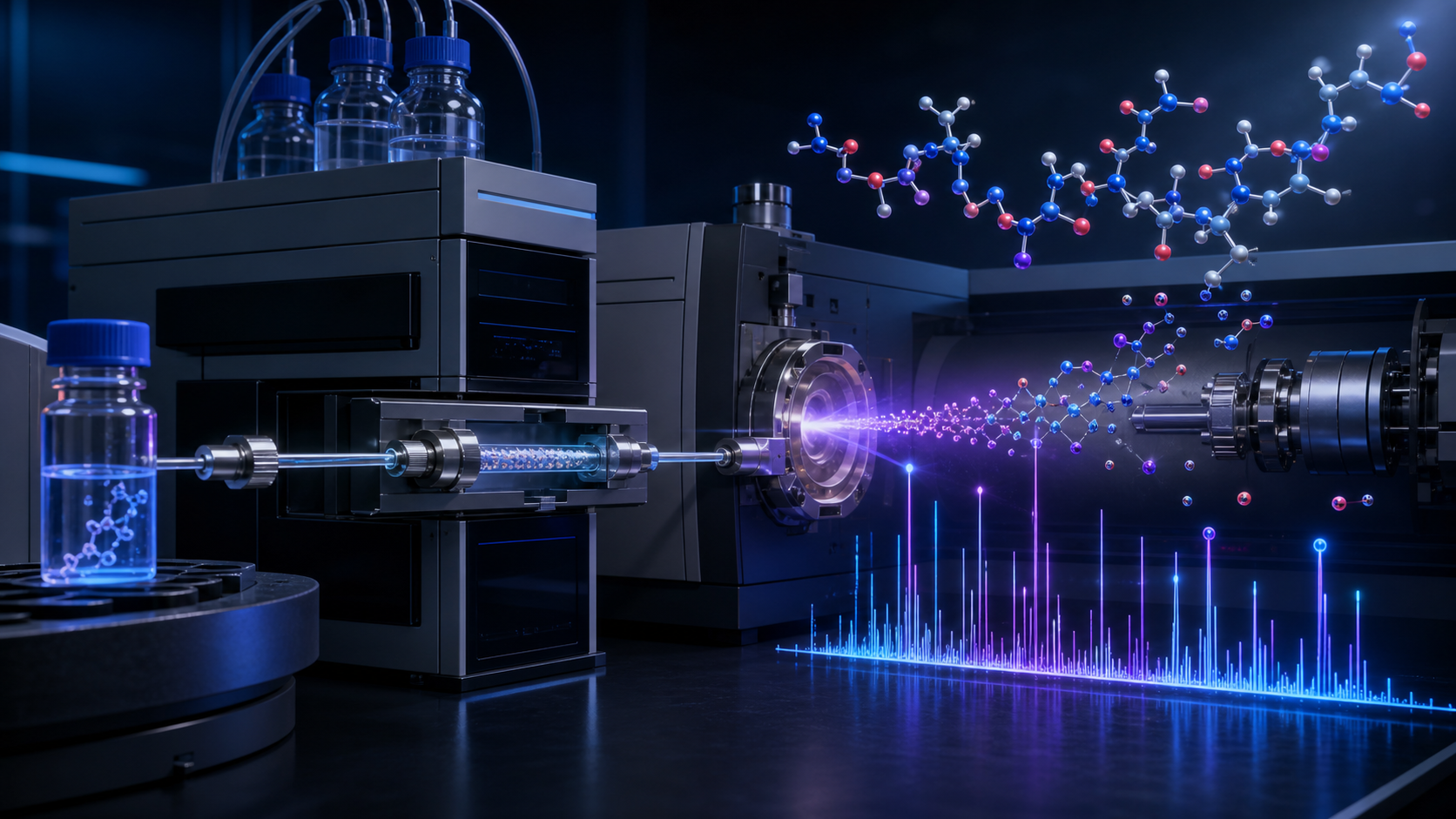
Why residual solvents matter analytically
Peptide manufacturing can involve solvents from synthesis, cleavage, precipitation, purification, washing, drying, or reconstitution workflows. Even when the peptide identity and purity look strong, volatile residues can remain if drying or solvent exchange is incomplete.
Residual solvent testing is not a purity chromatogram. It targets volatile organic compounds that may not appear in a peptide HPLC method or may be hidden by sample preparation.
How headspace GC works
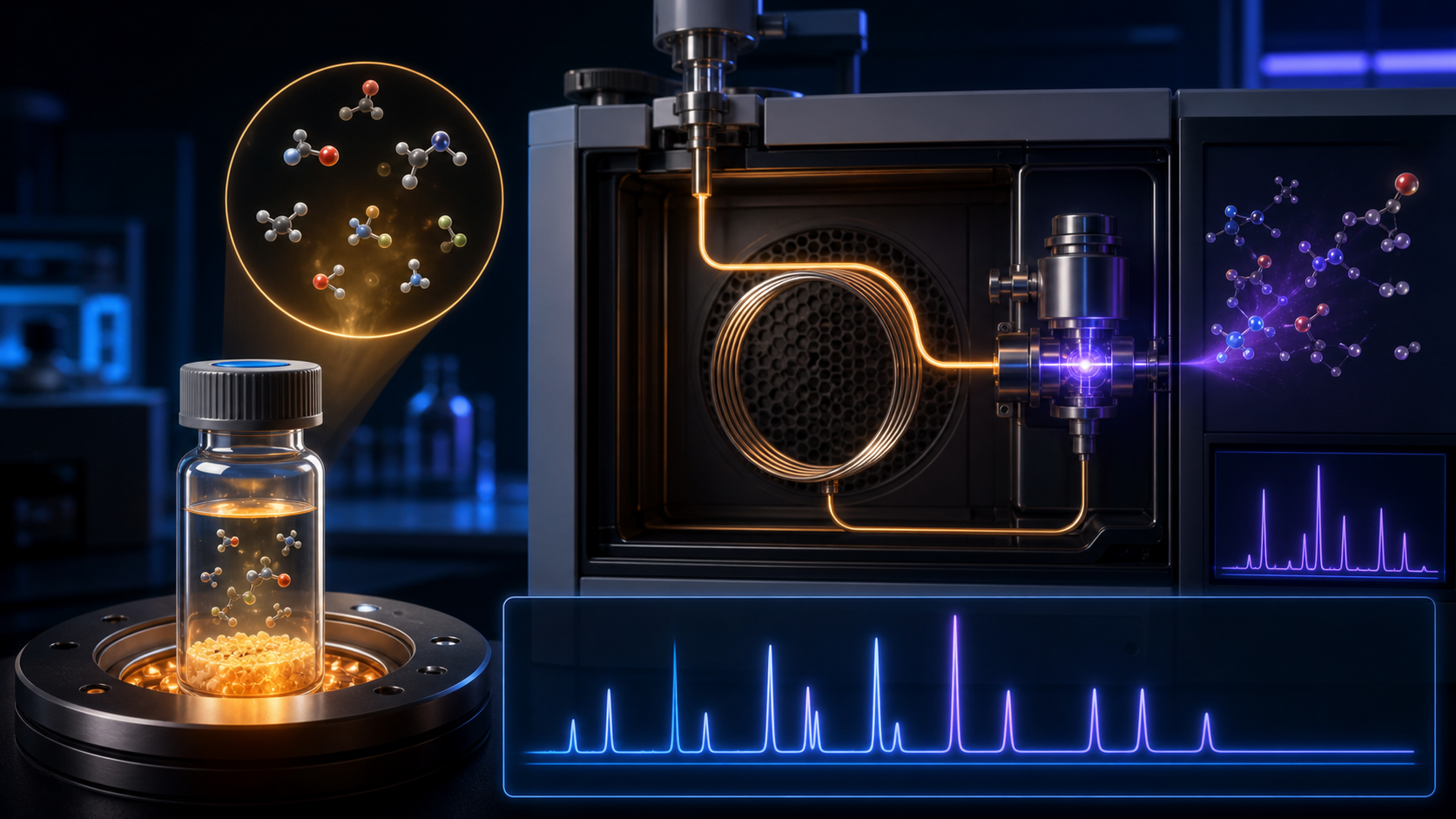
The sample is sealed in a headspace vial and heated under controlled conditions. Volatile compounds partition into the gas phase above the sample. A portion of that vapor is injected into a gas chromatograph, where compounds separate on a capillary column and are detected by FID, MS, or another detector.
Headspace analysis helps protect the GC system from nonvolatile peptide material and focuses the method on compounds that evaporate into the headspace.
The target solvent list drives the value
A useful residual-solvent panel starts from process knowledge. Acetonitrile, dichloromethane, DMF, DMSO, TFA-related volatile residues, ether, methanol, ethanol, isopropanol, and other solvents may or may not be relevant depending on the supplier process.
The COA should not imply that all possible solvents were tested. It should list the named targets, reporting limits, method, and whether any compounds were quantified.
Limits depend on context
ICH Q3C classifies residual solvents and provides permitted daily exposure concepts for drug products. Research-material reporting can use those frameworks as scientific reference points, but it should avoid implying an approved product release unless that regulatory context exists.
- A not-detected result applies to named solvents and method reporting limits.
- GC-MS can help confirm identity when peaks are ambiguous.
- Residual solvent testing complements, but does not replace, peptide purity and identity testing.
- Untargeted volatile screening can miss compounds without library confirmation or adequate method scope.
- Headspace conditions change recovery and sensitivity.
- Nonvolatile process residues require other methods.
Accuracy checks before relying on this result.
- Do not imply all solvents were evaluated unless the target list or validated untargeted method scope says so.
- Do not use ICH Q3C patient-safety limits to imply approval, clinical safety, or regulatory release for a research material.
- Remember that headspace GC focuses on volatile compounds; nonvolatile reagents, salts, metals, and organic impurities need other methods.
What a stronger report should make visible.
- Target solvent list visible.
- Method named as headspace GC, GC-FID, or GC-MS.
- Units and reporting limits stated per solvent.
- Calibration and system suitability traceable.
Analytical scope
This article is educational content about analytical chemistry and COA interpretation. It does not state that any peptide is safe, effective, sterile, injectable, therapeutic, approved, compliant, or fit for human or animal use.
Research-use-only, no reliance, and liability limits.
These pages are research-use-only analytical education. They are not medical, safety, legal, regulatory, quality-system, purchasing, or product-use advice, and they do not state that any material is safe, effective, sterile, injectable, therapeutic, approved, compliant, or fit for human, animal, clinical, therapeutic, diagnostic, drug, dietary, cosmetic, resale, or other regulated use.
- Official standards, signed lab records, applicable law, and qualified professional review control.
- Visitors use and rely on this content at their own risk.
- To the fullest extent permitted by law, Purity Analytics LLC and its laboratories, partners, vendors, affiliates, contractors, service providers, customers, and agents disclaim warranties and liability for losses arising from access, use, or reliance.
Scientific anchors
These references are used as method-development and interpretation anchors. They do not turn this page into a regulated product release protocol.