
Purity and assay answer different questions
Purity is about the composition of detected signal. Assay is about amount. A vial can be 99 percent pure and still be underfilled. A vial can contain the labeled mass but have a poor impurity profile. Peptide COAs need both views when the label amount matters.
Current source reports may state net peptide content in milligrams, including separate rows for named blend components. The amount must remain linked to the exact source label and method basis. More generally, quantitative assay converts analytical response into concentration or mass using a calibration model, and every approach requires controlled sample preparation and calculations.
Reference standards are the backbone
The calibration standard defines the meaning of the response. If the standard concentration, purity, salt form, water content, counterion content, or storage stability is wrong, the final amount can be wrong even when the instrument behaves perfectly.
For peptides, net peptide content can differ from gross powder mass because of water, salts, counterions, and excipients. A useful assay method accounts for what the label claim actually promises: free peptide, acetate salt, total peptide content, IU activity, or another defined unit.
What validation needs to establish
A quantitative method needs more than a curve. It should establish specificity, range, linearity, accuracy, precision, and robustness appropriate for the report use. FDA and ICH validation guidance treat quantitative active-moiety tests as a core validation category because the result drives release and comparison decisions.
For customer-facing COAs, the minimum defensible package is a method that shows calibration fit, replicate precision, system suitability, and clear calculation logic. Deep release testing may also include recovery studies, solution stability, and method-transfer evidence.
Where Beer-Lambert fits
Beer-Lambert UV quantitation can be fast and useful when the peptide has a stable absorbance, the extinction coefficient is appropriate, and the matrix does not interfere. It becomes weaker when impurities absorb similarly, excipients contribute to absorbance, or the molecule lacks a strong chromophore.
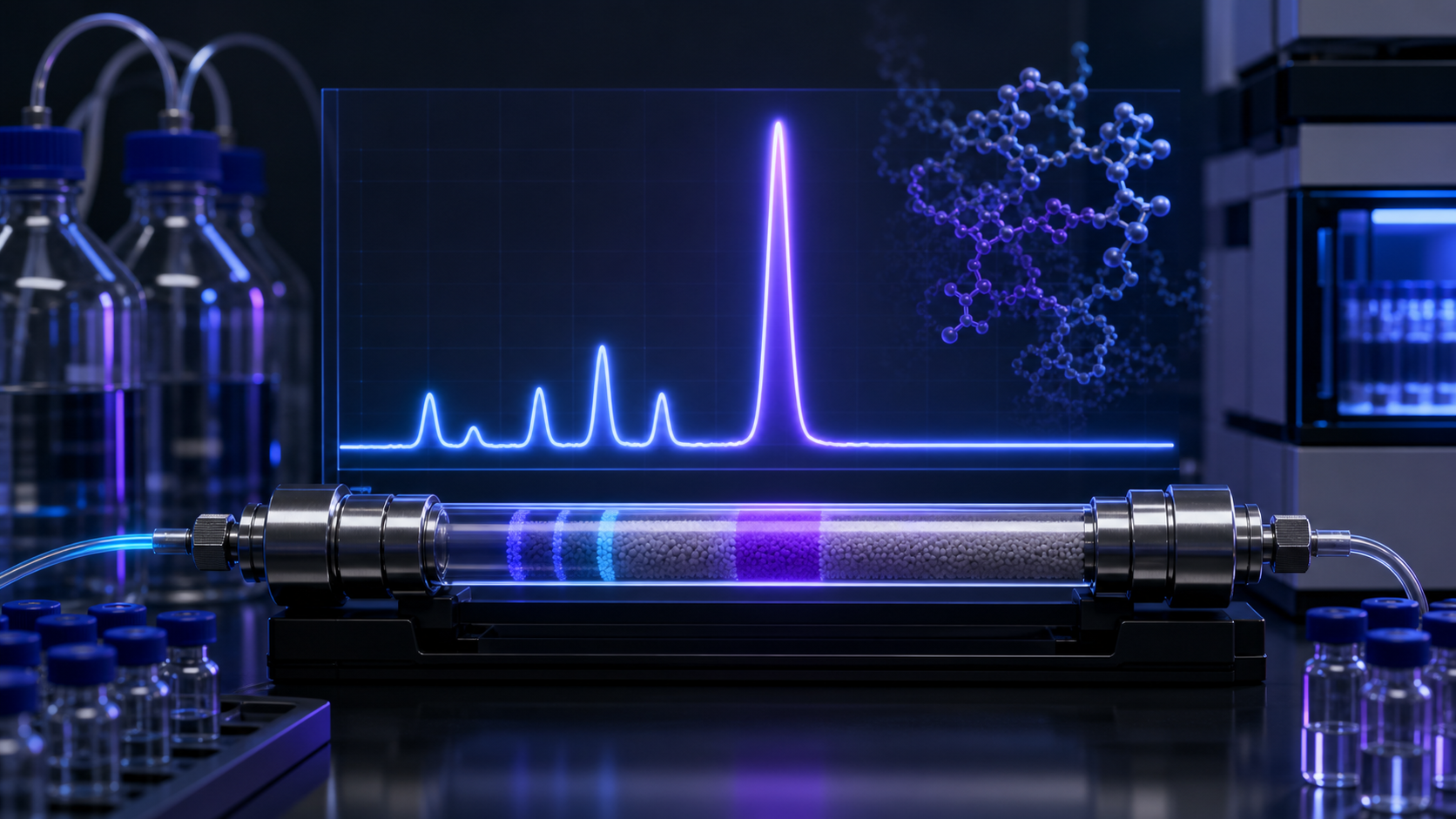
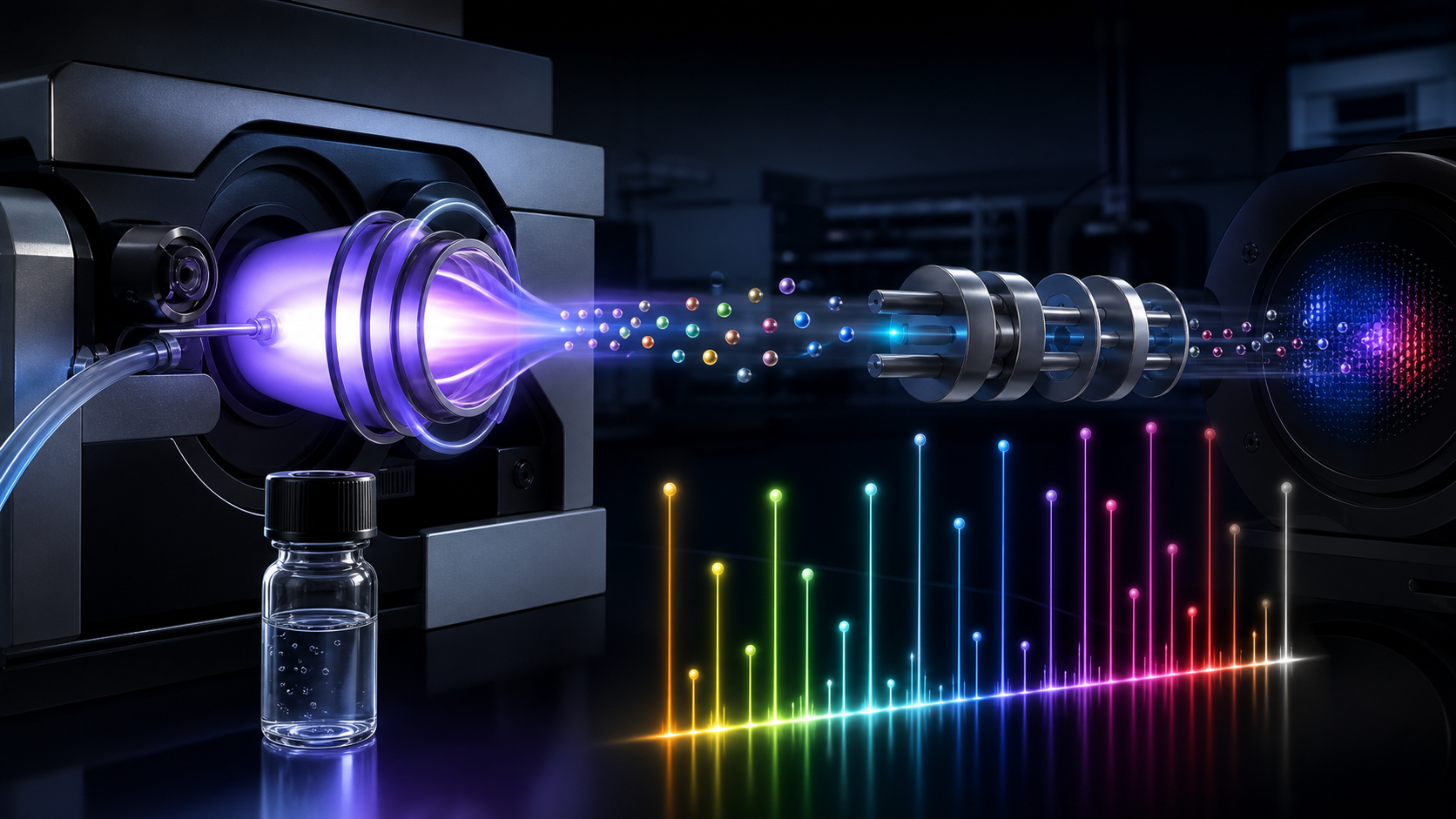
LC assay adds separation before quantitation. That separation can reduce interference and assign the area to a specific chromatographic peak. LC-MS can add identity, but quantitative LC-MS requires its own calibration and control strategy.
- Assay result should be read as amount under a defined method and label basis.
- Percent purity cannot substitute for fill amount or potency.
- A strong assay report identifies the reference standard and calculation path.
- Reference-standard uncertainty flows directly into the reported result.
- Water, salts, and counterions can make gross vial mass differ from net peptide amount.
- UV-only quantitation can overstate confidence when absorbance is not specific to the intended peptide.
Accuracy checks before relying on this result.
- Do not substitute purity for amount. A high purity percentage does not prove labeled fill or dose-equivalent content.
- Interrogate the reference standard: identity, purity/potency assignment, water, salt form, counterion, storage, and preparation basis can all move the result.
- Do not use IU, potency, or activity language unless the unit basis and calibration model support that exact claim.
What a stronger report should make visible.
- Reference standard identity, potency/purity, and preparation basis documented.
- Calibration range brackets the sample response.
- Replicate sample preparations and precision criteria reported.
- Final units are clear: mg/vial, percent label claim, IU, or another defined unit.
Analytical scope
This article is educational content about analytical chemistry and COA interpretation. It does not state that any peptide is safe, effective, sterile, injectable, therapeutic, approved, compliant, or fit for human or animal use.
Research-use-only, no reliance, and liability limits.
These pages are research-use-only analytical education. They are not medical, safety, legal, regulatory, quality-system, purchasing, or product-use advice, and they do not state that any material is safe, effective, sterile, injectable, therapeutic, approved, compliant, or fit for human, animal, clinical, therapeutic, diagnostic, drug, dietary, cosmetic, resale, or other regulated use.
- Official standards, signed lab records, applicable law, and qualified professional review control.
- Visitors use and rely on this content at their own risk.
- To the fullest extent permitted by law, Purity Analytics LLC and its laboratories, partners, vendors, affiliates, contractors, service providers, customers, and agents disclaim warranties and liability for losses arising from access, use, or reliance.
Scientific anchors
These references are used as method-development and interpretation anchors. They do not turn this page into a regulated product release protocol.