What purity actually means
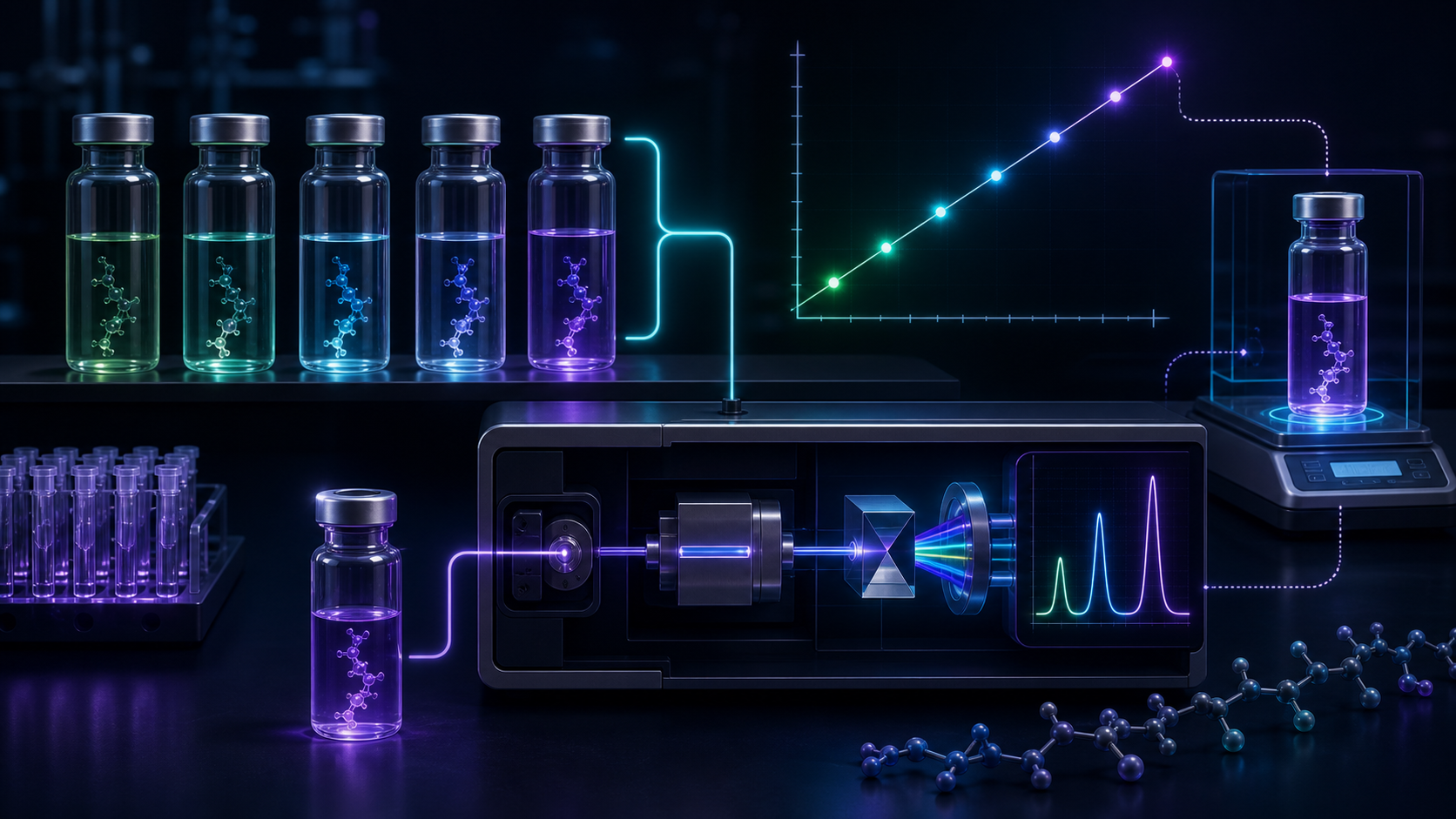
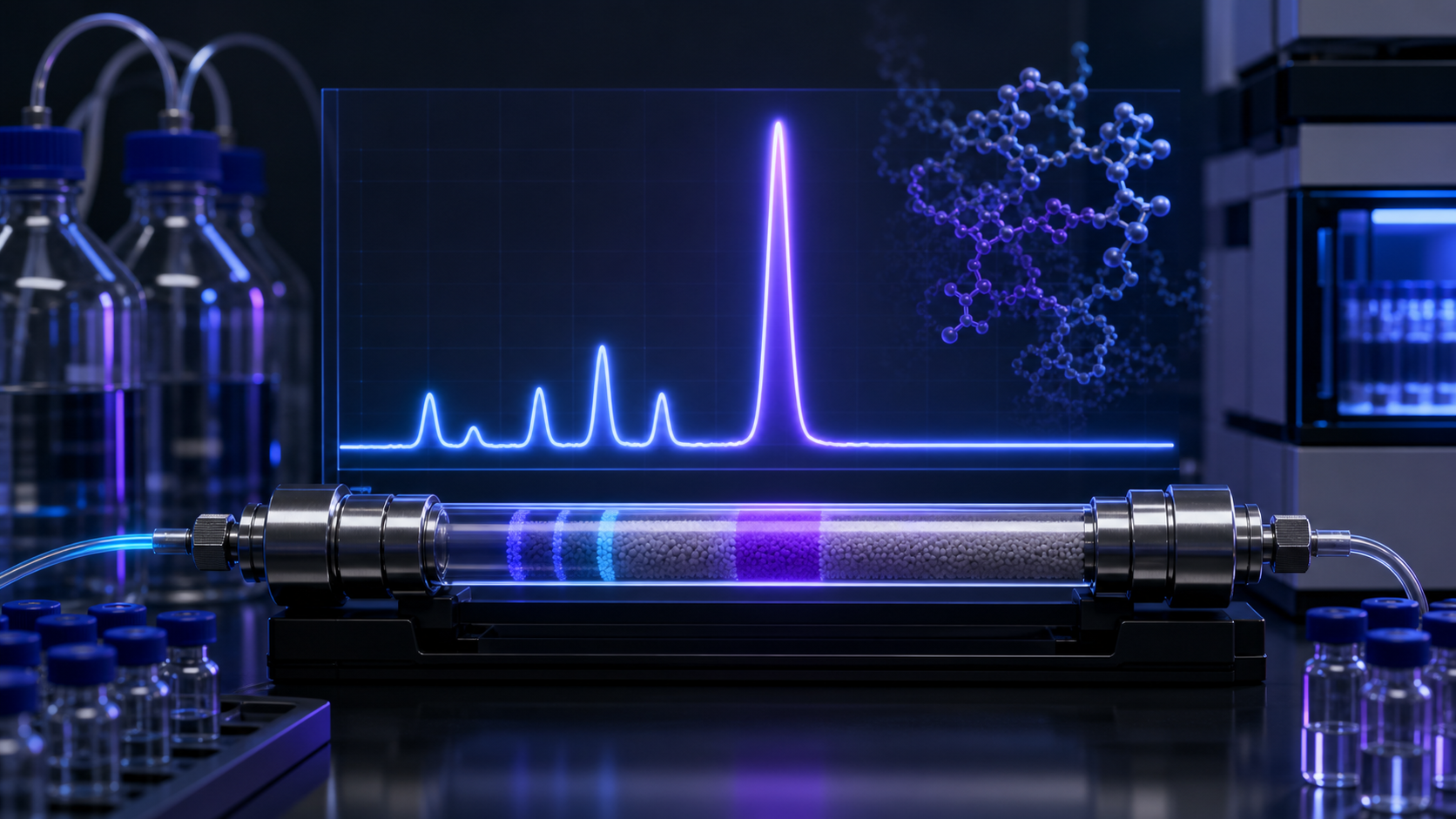
For peptides, purity usually means area percent in a chromatographic method. The sample is separated on a column, the detector records a signal over time, and software integrates the area under each peak. If the main peptide peak accounts for 98.7 percent of integrated signal at the chosen wavelength, the COA may report 98.7 percent purity.
That number is useful, but it is method-bound. It does not automatically mean 98.7 percent of the vial mass is the intended peptide. It means 98.7 percent of the signal the method could see and integrate behaved like the main peak under those conditions.
How the separation works
Most peptide purity methods use reversed-phase HPLC or UPLC. The column contains a hydrophobic stationary phase, often C18 or a related chemistry. The mobile phase becomes progressively more organic, and peptide species elute as their interactions with the column weaken.
Related impurities can include deletion sequences, incomplete deprotection products, oxidation products, deamidation products, dimers, aggregates, counterion differences, or degradation fragments. Some separate cleanly. Some co-elute with the main peak. The method quality determines how much the chromatogram can reveal.
Detector choice changes what you can see
UV detection is common because peptide bonds absorb near low UV wavelengths and many aromatic residues absorb at higher wavelengths. But UV response is not universal. An impurity with weak absorbance at the monitored wavelength can be underrepresented. A strongly absorbing impurity can look larger than its molar amount.
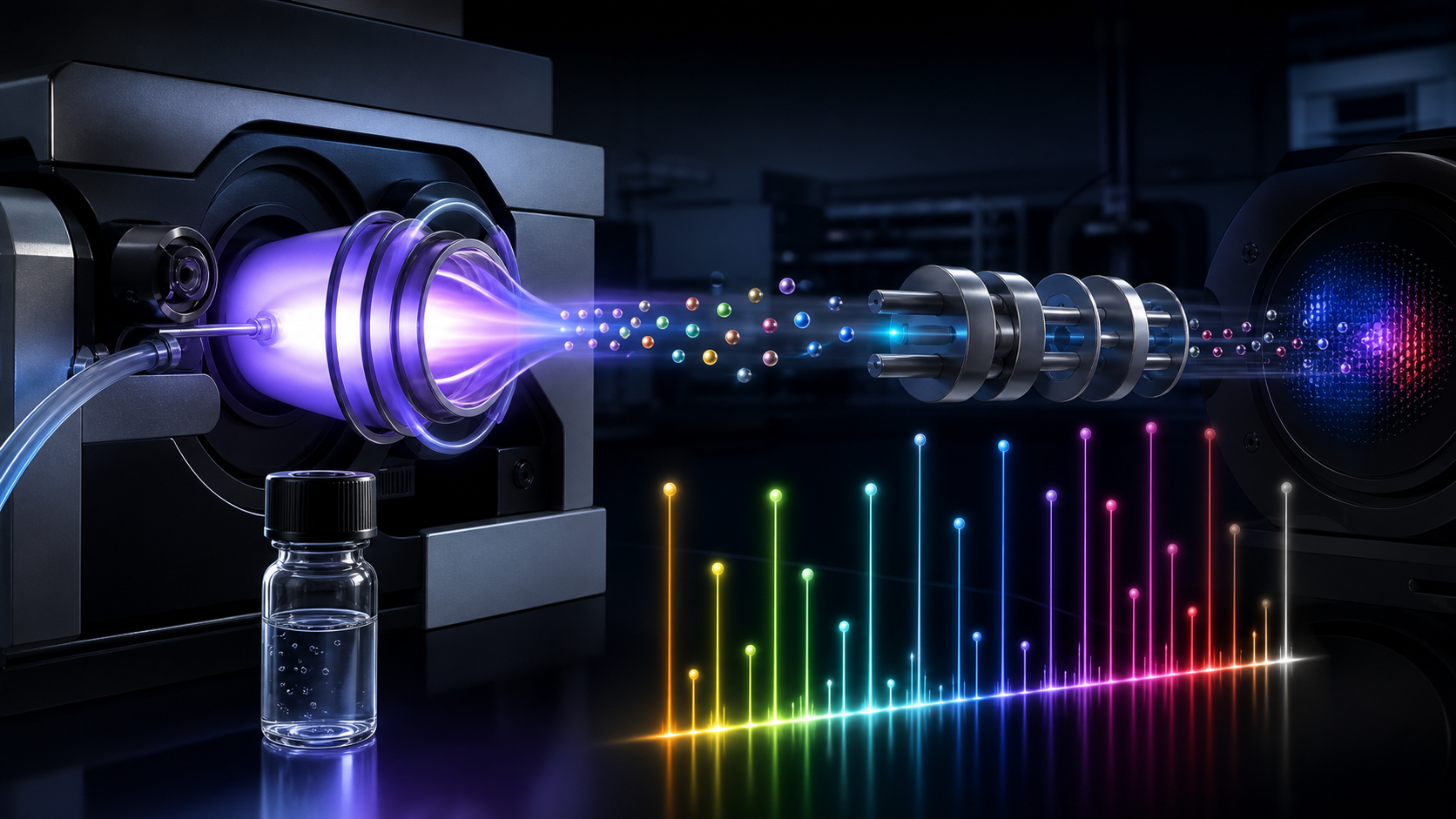
Pairing HPLC with mass spectrometry adds identity information to the peaks. A UV chromatogram can tell you that a secondary peak exists. LC-MS can often tell you what that peak is likely to be.
Integration is a scientific decision
Purity depends on integration rules: baseline placement, shoulder-peak handling, minimum peak threshold, blank subtraction, and whether solvent fronts or unrelated artifacts are excluded. A COA that shows only a final percent but not the chromatogram is harder to audit.
Good reporting includes the chromatogram, main peak retention time, impurity peak table, detection wavelength, column chemistry, gradient summary, and system suitability. The goal is not decoration. It is reproducibility.
- A high purity number supports low detected related-substance burden under one method.
- It does not prove identity unless paired with identity testing.
- It does not prove fill amount; a vial can contain very pure peptide but less peptide than labeled.
- Co-eluting impurities can hide under the main peak.
- Non-UV-active or weakly UV-active impurities can be missed by UV-only methods.
- Area percent is not the same as mass percent unless detector response factors are understood.
Accuracy checks before relying on this result.
- Do not equate area percent with vial mass, net peptide content, potency, or product quality by itself.
- Assume co-elution is possible unless the report shows resolution, chromatographic conditions, and integration rules.
- Do not compare purity numbers across labs or methods unless wavelength, column, gradient, detector response, and integration approach are comparable.
What a stronger report should make visible.
- Full chromatogram visible, not only the final purity percent.
- Column, mobile phase, gradient, detector wavelength, and integration method stated.
- Main peak retention time and impurity peak table included.
- System suitability criteria documented, especially resolution and repeatability.
Analytical scope
This article is educational content about analytical chemistry and COA interpretation. It does not state that any peptide is safe, effective, sterile, injectable, therapeutic, approved, compliant, or fit for human or animal use.
Research-use-only, no reliance, and liability limits.
These pages are research-use-only analytical education. They are not medical, safety, legal, regulatory, quality-system, purchasing, or product-use advice, and they do not state that any material is safe, effective, sterile, injectable, therapeutic, approved, compliant, or fit for human, animal, clinical, therapeutic, diagnostic, drug, dietary, cosmetic, resale, or other regulated use.
- Official standards, signed lab records, applicable law, and qualified professional review control.
- Visitors use and rely on this content at their own risk.
- To the fullest extent permitted by law, Purity Analytics LLC and its laboratories, partners, vendors, affiliates, contractors, service providers, customers, and agents disclaim warranties and liability for losses arising from access, use, or reliance.
Scientific anchors
These references are used as method-development and interpretation anchors. They do not turn this page into a regulated product release protocol.